Enough protein to cross a threshold, not a specific food. A dose-response trial in resistance-trained young men found muscle protein synthesis rose in steps as researchers increased a single dose of whole egg protein after a leg workout, then stopped rising entirely once the dose reached 20 grams. A serving of grilled salmon, three or four eggs, a cup of Greek yogurt, or a scoop of whey protein all comfortably clear that mark. What predicts recovery is reaching the threshold reliably after training, not which specific food happens to carry the protein.
The short answer
Any whole food or combination that delivers roughly 20 to 25 grams of protein, with at least 2.5 to 3 grams of leucine, triggers close to the maximum muscle-building response a single meal can produce. Salmon, chicken, eggs, Greek yogurt, cottage cheese, and a standard protein shake all clear that bar in a normal serving. Eating well past it in one sitting doesn't add a second wave of benefit, and it doesn't need to happen in some narrow window right after you finish training. The more useful question isn't which single food is best, since several very different foods clear the same bar equally well, it's whether you're reliably reaching that bar at most meals across a normal week of training.
What a dose-response trial found
A trial published in the American Journal of Clinical Nutrition gave resistance-trained young men increasing single doses of whole egg protein after a bout of leg resistance exercise. Moore and colleagues found muscle protein synthesis climbed step by step as the dose rose, then plateaued once it reached 20 grams, with no further increase at 40 grams. The extra protein in the 40-gram dose didn't just sit unused either, the researchers measured a rise in amino acid oxidation at that dose, meaning the body burned the surplus for energy rather than putting it toward building tissue.
Twenty grams moved the needle. Forty grams moved it exactly as far, plus a chunk of it just got oxidized.
Why more protein past the threshold doesn't help
The mechanism behind the plateau centers on leucine, a specific amino acid that acts as the trigger for muscle protein synthesis to ramp up. Once a meal supplies roughly 2.5 to 3 grams of leucine, the trigger has fired, and additional protein in that same sitting doesn't fire it a second time or make it fire harder. This is a separate question from your per-meal absorption capacity generally, covered in more detail in is there a limit to how much protein you can absorb, but the practical result is similar: past a certain point in one meal, extra protein is just extra calories, not extra muscle signal.
Whole food sources that clear the threshold
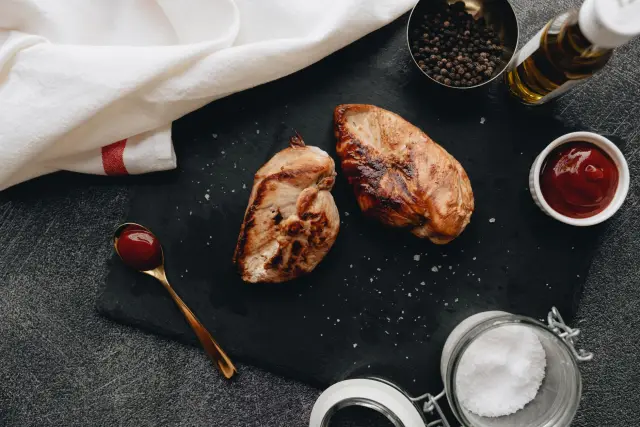
A single serving of most animal proteins clears the threshold without much thought. Around 130 grams of chicken breast, a normal fillet of salmon or other fatty fish, three to four whole eggs, a cup of Greek yogurt, or a cup of cottage cheese all land at or above 20 to 25 grams of protein with enough leucine to trigger the full response. Whey protein isolate is efficient here too, a single scoop mixed with water or milk typically clears the mark in a small volume, which is part of why it's a popular convenience option rather than a requirement.
Plant sources take a bit more planning. Lentils, tofu, tempeh, and legumes generally carry less leucine per gram than animal protein, so hitting the same threshold from a single plant source alone often means a larger portion, or combining two sources, like a grain and a legume together, to reach an equivalent amino acid profile. A cup and a half of cooked lentils paired with a serving of rice, or a larger block of tofu alongside a handful of nuts, tends to land in a similar range to the animal-based examples above, it just takes more volume on the plate to get there.
None of this requires precision. The threshold is wide enough that guessing a reasonable serving of any of these foods almost always clears it, and the cost of slightly overshooting it in one meal is essentially nothing beyond a few extra calories, not a wasted opportunity.
Does it need to be eaten right after training?
Not on a narrow schedule. A separate trial specifically on protein timing found no meaningful difference between protein eaten immediately before versus immediately after a workout, and a related meta-analysis found the apparent benefit of timing protein around training was mostly explained by total daily protein rather than the clock, covered in full in when should you eat protein for muscle. The practical takeaway for recovery food specifically is that a threshold-clearing meal sometime within a few hours of training, whenever that actually fits your day, does the job. It doesn't need to be the first thing you eat once you put down the weights.
Whole food or powder for recovery
Both work for the specific mechanism this article covers, so the choice mostly comes down to what's actually sustainable for you. Whole food sources bring along other nutrients, like the omega-3s in salmon or the choline in eggs, that a plain protein isolate doesn't. Powder is faster and easier to measure precisely, which matters more on a day when cooking a full meal right after training isn't realistic. Neither one produces a bigger muscle protein synthesis response than the other once both clear the same threshold, so pick based on convenience and appetite, not on which one sounds more like a supplement.
How OffRamp helps
OffRamp doesn't rank foods against each other or crown a single best option for recovery, because the research doesn't support that framing. The app logs whatever you actually eat toward your protein floor for the day, whole food or shake, salmon or scoop, since a diet that reliably clears the threshold at most meals beats chasing any one ingredient's reputation.