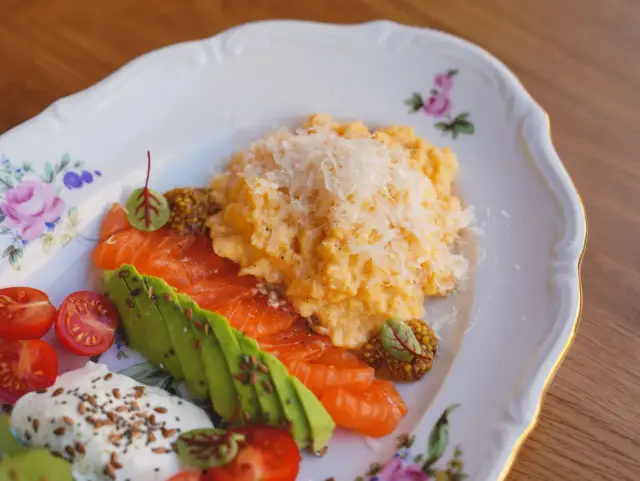
A lot of eating advice that used to work stops working once a GLP-1 is in the picture, and it's not because the food itself changed. Three meals a day, cleaning your plate, saving room for dessert, all of that assumed a body whose hunger and fullness signals worked the way they did before. A GLP-1 changes the timing and intensity of those signals directly, which is most of why old habits suddenly feel wrong. The fix isn't a calorie target, a forbidden-foods list, or forcing yourself to eat less through willpower. It's smaller, protein-first plates and relearning what "enough" actually feels like now.
The short answer
Eat protein first on your plate, expect to feel full sooner and with less food than before, and don't force yourself to finish a meal just because it's what's in front of you. None of this involves counting calories. The medication is already doing real work on appetite; the job left for you is making sure the food that does go in covers your protein floor, since that's the one number appetite suppression can quietly work against if you're not paying attention.
Why old eating habits stop working
GLP-1 medications slow gastric emptying, meaning food stays in your stomach longer before moving into your digestive system. That's a large part of the mechanism behind reduced appetite: fullness signals that used to require a full meal now arrive sooner and last longer off a smaller amount of food. A plate that used to feel normal can start to feel like genuinely too much, not because your stomach shrank, but because the timing of when "full" arrives changed. Eating habits built around the old timing, finishing what's on your plate, eating on a fixed three-meal schedule regardless of hunger, stop matching what your body is actually asking for.
Protein first, then everything else
With a smaller effective appetite, what you eat first on the plate matters more than it used to, because there's less room left for whatever comes after it. Protein is the one macronutrient most directly tied to keeping muscle during weight loss, which is a large part of why OffRamp is built around a daily protein floor rather than any calorie number. Eating protein first, before vegetables or starches, means the smaller total volume your appetite allows for still covers that floor, instead of filling up on the easiest, most available food on the plate and running short on protein by the time you're full.
Smaller, more frequent meals, if that's what your body is asking for
Some people find that two or three smaller meals plus a protein-forward snack work better than the traditional three-meals-a-day pattern once appetite drops this much. Others keep their old meal schedule and just find each meal is naturally smaller now. Neither is the "correct" pattern. The honest approach is paying attention to what your actual appetite is asking for on a given day rather than forcing either structure, since the slowed digestion behind all of this doesn't run on the same clock for everyone.
Relearning what "enough" feels like
This is the part that takes the most adjustment. Fullness used to be a signal you'd reliably feel after a certain volume of food, and a lot of people learned, consciously or not, to eat past a milder version of it out of habit. On a GLP-1, that signal often arrives earlier, more clearly, and stronger than it used to, and pushing through it the way you might have before can mean genuine discomfort rather than just a full feeling. Stopping when a plate feels done, even if it looks smaller than what you used to eat, is the actual skill here, not a rule to follow but a signal worth trusting more than it used to deserve.
The plate didn't get smaller because you're eating less on purpose. It got smaller because "full" arrives sooner now.
Hydrate separately from meals, not instead of them
Drinking a lot of water right before or during a meal can add to that early-fullness feeling and crowd out the protein you actually want to prioritize on the plate. Spacing water out between meals rather than loading up right beforehand keeps hydration on track without competing with the smaller amount of food you're actually trying to make count.
What a day without calorie math actually looks like
In practice, this tends to mean protein at the center of each meal, whatever fits comfortably around it, and stopping when a plate feels done rather than finished. A day might look like eggs or Greek yogurt to start, a protein-forward lunch that doesn't require finishing every side, and a lighter dinner with room for whatever actually sounds appealing that day. There's no number to hit beyond the protein floor itself, which is the one target that protects the thing appetite suppression can otherwise quietly work against.
Eating out doesn't require a different approach
Restaurant meals tend to come in portions built for an appetite from before you started a GLP-1, which can make a menu feel overwhelming even though the actual approach doesn't change. Ordering the protein-forward option, asking for a to-go box at the same time the meal arrives, or simply planning to only eat part of what's served all work the same way they would at home. The goal is still the same plate, protein first, stop when it feels done, it just happens to be served on someone else's dish that day.
If appetite has dropped so much that eating enough to comfortably reach your protein floor feels genuinely difficult on most days, not just occasionally, that pattern is worth raising with your prescriber directly rather than pushing through it alone, since they can look at whether anything about your current dose or routine needs adjusting.
How OffRamp helps
OffRamp's quick-add logs a meal against your protein floor in a couple of seconds, without asking for a calorie count on anything. The point isn't tracking everything you eat, it's making sure the smaller amount your appetite now allows for still adds up to enough protein by the end of the day, since that's the number a quieter appetite can otherwise erode without you noticing.