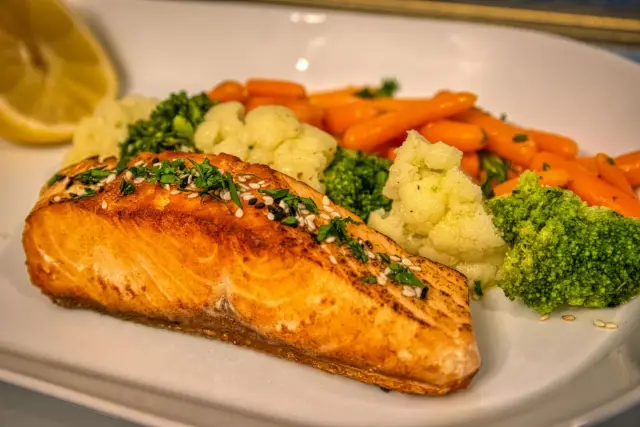
Eating enough food overall and eating enough protein specifically are two different things, and it's easier than it sounds to do the first without the second. A day can look completely normal in terms of how much you ate and still land well short of a real protein target, especially with appetite already reduced from a GLP-1 or from weight loss generally. The gap tends to show up first in a handful of practical, everyday signs, well before anything a lab test would flag, and they're worth knowing so a quiet shortfall doesn't run for weeks unnoticed.
The short answer
The clearest everyday signs of not getting enough protein are hunger returning unusually fast after a meal, strength or recovery that's quietly slipping in workouts, hair and nails that seem more brittle than they used to be, and food cravings that feel louder and harder to satisfy than normal. None of these require a blood test to notice. They show up in how a day actually feels, and they tend to cluster together rather than appearing one at a time.
Why the gap happens even when you're eating "enough"
Total food volume and total protein are only loosely connected. A day built around smaller, less protein-dense meals, dictated partly by a reduced appetite, can genuinely feel like enough food while delivering a fraction of a real protein target. This gap widens specifically during weight loss and on a GLP-1, since appetite drops fastest for exactly the kind of larger, protein-rich meals, a full portion of chicken or fish, that used to carry most of the day's protein without any conscious effort. What's left of a smaller appetite tends to go toward whatever's easiest, which is rarely the most protein-dense option on the plate.
Sign one: hunger returns within an hour
Protein is consistently the most filling macronutrient gram for gram, more than carbohydrate or fat, which means a meal that's genuinely light on protein tends to leave a specific, familiar kind of hunger that shows up again uncomfortably soon after eating, sometimes within an hour. If lunch or dinner regularly leaves you looking for something else within a short window afterward, that's often a protein gap showing up as premature hunger, not a sign you simply need to eat more food overall.
Sign two: strength or recovery is quietly slipping
Muscle needs protein as raw material, and a body running short on it for long enough will draw on existing muscle to cover the gap, which shows up as strength numbers that feel harder to hold onto or recovery that takes noticeably longer after a normal workout. This tends to be gradual, not sudden, which is exactly what makes it easy to miss week to week. It's the same underlying mechanism behind why protecting muscle during weight loss depends so heavily on protein specifically, not just eating enough calories in general.
Sign three: hair and nails seem more brittle than usual
Hair and nails are made largely of protein, and they're low-priority tissue from the body's perspective, meaning a genuine protein shortfall tends to show up there before it affects more essential functions. Hair that seems to be shedding more than normal or nails that break or peel more easily aren't proof of a protein problem on their own, since several other things can cause the same pattern, but they're worth noticing as one data point alongside the others rather than dismissing outright.
Hunger that won't stay resolved, strength that's quietly slipping, hair that's thinner than it should be. None of it needs a lab test to notice.
Sign four: cravings get louder, not quieter
Because protein is so effective at producing lasting fullness, running short on it consistently can leave a kind of background hunger that shows up as louder, harder-to-ignore food thoughts generally, the same pattern covered in how to stop food noise. The frustrating part is that this pull rarely points toward more protein specifically. It tends to point toward whatever's fastest and most available, which is very often lower in protein than what would have actually resolved the underlying gap.
How much is actually enough
The official minimum to prevent deficiency, roughly 0.8 grams of protein per kilogram of body weight daily, is a floor meant to prevent illness in a sedentary body, not an optimal target for anyone actively losing weight or trying to hold onto muscle. Research from sports nutrition specifically, including a position stand from the International Society of Sports Nutrition, points to a meaningfully higher range for people in a calorie deficit or doing regular resistance training, generally somewhere between 1.2 and 1.6 grams per kilogram, sometimes more depending on activity level. This is a large part of why OffRamp uses a personalized daily protein floor instead of the generic minimum: the number that actually prevents these signs from showing up is higher than most people assume.
What to do about it
The fix is rarely eating more food overall, it's shifting what a meal is built around. Leading each meal with a protein source rather than treating it as a side, keeping a couple of fast, low-effort options on hand for low-appetite days, Greek yogurt, a protein shake, hard-boiled eggs, and tracking the actual number rather than assuming a normal-feeling day of eating covers it are the three things that close this gap fastest. None of it requires counting calories or overhauling how you eat, just making sure protein specifically gets prioritized rather than left to whatever's left over.
How OffRamp helps
OffRamp's protein floor is a personalized daily minimum, not the generic 0.8-gram baseline, logged in a couple of seconds per meal so the gap between "ate enough food" and "ate enough protein" gets caught the same day instead of weeks into a pattern of the signs above. If a genuine deficiency is a concern rather than simply running below an optimal target, that's worth raising with your prescriber or a dietitian directly.