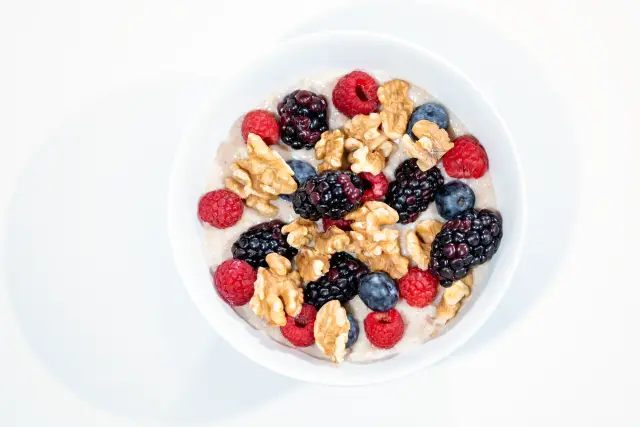
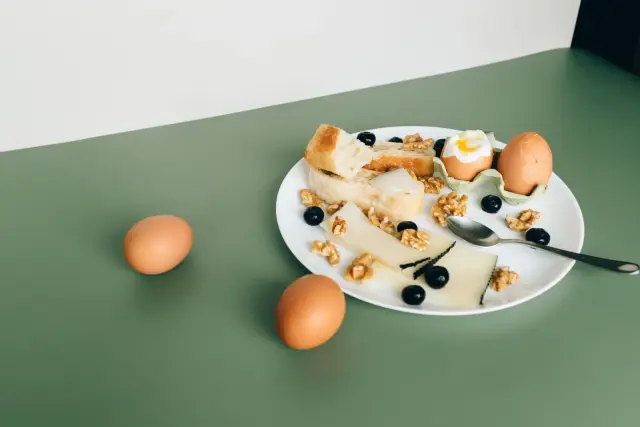
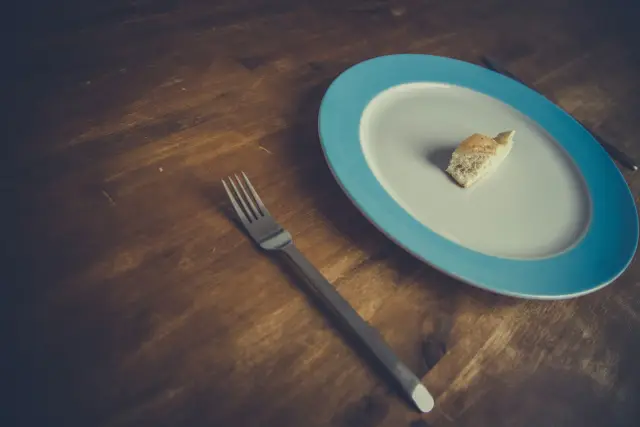
Volume eating means choosing foods that occupy a lot of space for the energy they carry, so you can put more food on the plate rather than less. Water and fibre take up room without adding much energy, and fat does the opposite. Pick more of the first sort and a normal-looking plate holds noticeably less energy than it used to, without anyone counting anything.
The short answer
It works, and the evidence for it is unusually good for an internet eating tactic. The strongest test is a year-long trial by Julia Ello-Martin, Barbara Rolls and colleagues, published in the American Journal of Clinical Nutrition in 2007. Ninety-seven women were split into two groups. One was advised to reduce fat. The other was advised to reduce fat and add water-rich foods, mainly fruit and vegetables. At six months the second group had lost 8.9 kg against 6.7 kg, ate about 225 grams more food per day, and reported significantly less hunger.
What energy density actually means
Energy density is how much energy a food carries per gram of its weight. It is mostly determined by water content, because water contributes weight and volume and no energy at all. A cucumber and a handful of almonds can sit at opposite ends of that scale while looking like a similar amount of effort to eat.
The reason this matters is that people eat a fairly consistent weight of food day to day, more consistent than the energy in it. Rolls' lab has demonstrated this repeatedly: change the energy density of a meal without changing how it looks, and intake in grams stays roughly the same while intake in energy moves. Volume eating is simply that finding, turned into a shopping rule.
People eat a fairly consistent weight of food. Change what that weight is made of and the arithmetic changes without the plate looking different.
The trial where people ate more and lost more
The Ello-Martin result is worth sitting with, because it runs against the instinct that maintenance requires eating less of everything. The group that lost more weight was the group that ate more food. Not more energy, more food, by 225 grams a day, which is roughly a large bowl of soup or a serious side of vegetables.
They also reported less hunger. The reduced-fat-only group's hunger ratings did not move from where they started, while the group adding water-rich foods reported feeling less hungry than at baseline. That is the part that makes this durable rather than clever. An approach that leaves you hungrier is one you abandon in a bad week, and the bad weeks are what decide whether the weight stays off.
Which foods actually do this
The list is boring and short, which is a point in its favour. Non-starchy vegetables, most fruit, broth-based soups, and lean protein cooked without much added fat. Cooking method does a lot of the work here: the same potato roasted in oil and boiled in water sit at very different points on the scale.
Two things get mistaken for volume eating and are not. Air is not water. Puffed and aerated snack foods look bulky and disappear without registering, because the volume collapses in the mouth before it ever reaches the stomach. And drinking water alongside a meal is not the same as water held inside the food, which is a distinction Rolls' lab has tested directly. Soup fills you up. The same ingredients with a glass of water next to them do not, to nearly the same degree. Fibre plays a related but separate role, covered in whether fibre actually keeps you full.
Where volume eating stops working
There is one situation where this advice is actively wrong, and it is common in the population this site is written for. If your appetite is already suppressed, whether by a GLP-1, by an illness, or by the tail end of a long deficit, then plate space is the scarce resource rather than the abundant one. Filling it with lettuce means the protein never lands.
That is not a small problem. Protein is the thing standing between weight loss and muscle loss, and it is the hardest macronutrient to hit on a shrunken appetite. If you are getting full after a few bites, the useful move is the opposite of volume eating: the most protein-dense version of the food you can manage. Early satiety changes the whole calculation, and how much protein you need after a GLP-1 is the number that should win the argument when the two rules conflict.
The other failure is subtler. Volume eating trains you to judge a meal by how it looks rather than by what is in it, and that heuristic breaks the first time you eat something restaurant-sized that happens to be low in bulk. It is a good default and a bad law.
How OffRamp helps
OffRamp has no calorie ceiling in it, deliberately. The only daily number in the app is a protein floor, a minimum to reach rather than a limit to stay beneath, which is exactly the number volume eating is most likely to quietly undermine. Log a day built around soup and salad and the app will show you it came in under the floor, which is the signal to add a protein source rather than to eat less of anything. The Regain Radar handles the other half, turning weigh-ins into a trend line so you can tell whether an eating change is doing anything over weeks rather than guessing from a single morning. Anything involving your treatment itself is a question for your prescriber, not for an app.