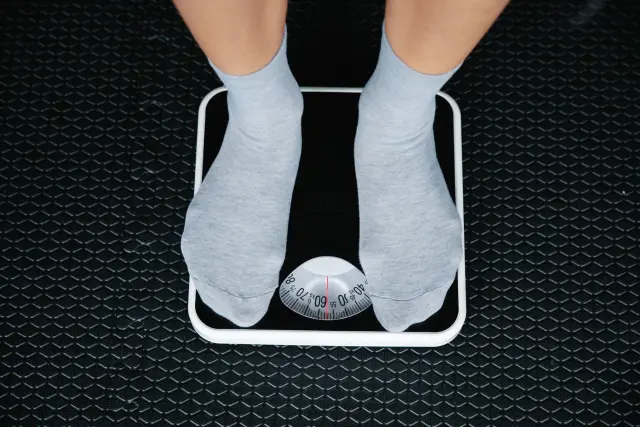
With consistent self-monitoring, not with willpower or good intentions. A study of 3,003 members of the National Weight Control Registry, people who had lost at least 30 pounds and kept it off for at least a year, found that those who maintained or increased how often they weighed themselves over the following year regained less weight than those who cut back. Cutting back on self-weighing didn't happen in isolation either. It came bundled with real changes in eating behavior, not just a missing number on a scale.
The short answer
The most reliably tested form of accountability for weight maintenance isn't a promise to yourself or a general commitment to eat better. It's a concrete, repeated act of checking in, most commonly self-weighing, that gives you real information often enough to notice a trend before it becomes a bigger problem. The specific method matters less than the consistency of doing it.
What a 3,003-person study found
Published in the journal Obesity, the study followed members of the National Weight Control Registry from baseline through a one-year follow-up. Butryn and colleagues found that at baseline, 36.2 percent of participants weighed themselves at least once a day, and more frequent weighing was associated with a lower body mass index across the group. Over the following year, people who maintained or increased their self-weighing frequency regained less weight than people whose frequency dropped. The group that weighed in less often also reported eating a higher percentage of their calories from fat, showed more disinhibited eating, and reported less dietary restraint by the one-year mark, a cluster of changes that moved together rather than happening in isolation.
The number on the scale wasn't just a number. People who stopped checking it also started eating differently, in ways the check-in itself seemed to be holding in place.
Why self-monitoring beats willpower as an accountability tool
Willpower and general intention are hard to measure and easy to quietly erode without noticing, since there's no concrete signal telling you it's slipping until the outcome has already changed. A regular check-in works differently. It produces a specific piece of information on a schedule, which means a small drift shows up as data long before it shows up as a meaningfully different body weight or a meaningfully different set of habits. That's consistent with a broader pattern in behavioral weight research: self-monitoring, whether of weight, food, or activity, tends to correlate with better outcomes not because the act of recording is magic, but because it forces a repeated, honest look at where things actually stand.
There's also a simpler explanation worth naming directly. A promise to yourself has no built-in moment where you find out whether you kept it. A check-in does, by design, every single time you do it. That structural difference, not any particular motivational trick, is most of what separates the two approaches in practice.
What to track besides the scale
The scale isn't the only viable check-in, and for some people it isn't the best one. Protein intake tracked toward a daily floor works as its own accountability signal, since it's concrete and doesn't require translating a number into a judgment about the day. Non-scale signals, energy levels, how strength training sessions feel, whether clothes fit the same way, are covered in more depth in what are non-scale victories, and function as a real check-in even on a week when the scale itself isn't moving or isn't something you want to look at. The common thread across all of these is that they're specific and repeatable, not vague or dependent on how motivated you feel on a given day.
Meal spacing and consistency can serve the same purpose. Noticing whether you're actually eating on a pattern that supports your protein floor across the day, rather than back-loading everything into one meal, is its own useful check-in, covered from a different angle in how often should you eat. Picking one or two of these signals and sticking with them beats trying to track everything at once, which tends to collapse under its own weight within a few weeks.
Building accountability that survives a bad week
An accountability system built around perfection tends to collapse the first time it's tested, since one missed day or one off week reads as failure and the incentive to keep going disappears with it. A system built around a repeated check-in, regardless of what that check-in shows on any given day, survives a bad week by design, because the act of checking in is the thing being measured, not the outcome. That's a meaningfully different frame from most accountability advice, which tends to focus on results rather than on the habit of looking.
This is worth being explicit about, because it's the part most people skip. Weighing in after a week where the number went the wrong direction is exactly when the habit matters most, since that's the check-in most likely to get skipped out of discomfort. The registry data doesn't distinguish between an easy check-in and an uncomfortable one. It just measures whether the check-in kept happening, which is the part actually within your control on any given day.
How OffRamp helps
OffRamp's Regain Radar and protein-floor log exist specifically to make the check-in itself the whole ask, not a judgment about whether the day went well. Log what you ate, log your weight when you weigh in, and let the trend do the work the registry data points to. There's no streak to protect and no perfect week required for the habit to still be doing its job.