Sarcopenia is the ongoing, age-related loss of muscle mass and strength, and it's a real, measurable condition with a clinical definition, not just a general description of getting older. It matters here specifically because weight loss, including the kind driven by a GLP-1, can speed it up if muscle isn't deliberately protected along the way. Here's what sarcopenia actually is, why weight loss adds risk on top of normal aging, and the two things research consistently shows help.
The short answer
Sarcopenia is diagnosable, progressive muscle loss tied to aging, and it's driven by two things that both respond directly to what you do: how much resistance your muscles regularly work against, and how much protein you're actually eating. Weight loss adds a third pressure on top of normal aging, since a calorie deficit without those two levers in place tends to pull disproportionately from muscle tissue. The condition isn't something that just happens to you. It's something research shows you can meaningfully slow down, and in some cases partly reverse, with two specific, well-studied habits.
What sarcopenia actually is
A 2019 consensus definition from the European Working Group on Sarcopenia in Older People describes it as a progressive, generalized condition involving loss of muscle strength, muscle mass, and physical performance, distinct from simply feeling a bit weaker some days. It's clinically diagnosable, typically through a combination of grip strength testing, a muscle mass measurement like a DXA scan, and a physical performance test such as walking speed. That distinction matters because it separates sarcopenia from the vague, unavoidable idea of getting older and reframes it as something with defined criteria, and defined ways to intervene.
Strength tends to decline faster than muscle mass itself, a pattern researchers call dynapenia when it's measured separately, which is part of why someone can look roughly the same size year to year while noticing stairs, jars, and grocery bags all getting harder to manage. Strength, not just visible muscle size, is the more functionally important piece, and it's also the one resistance training affects the fastest.
Why weight loss speeds it up
Any calorie deficit, medication-assisted or not, asks the body to pull energy from somewhere, and without a strong enough signal telling it to protect muscle specifically, some of that pull comes from lean tissue rather than fat alone. This effect isn't unique to GLP-1 medications, but appetite suppression strong enough to produce fast, sustained weight loss can make it more pronounced simply because there's more total loss happening, covered in more depth in how to prevent muscle loss on a GLP-1. Anyone already at risk for age-related muscle loss going into a significant weight loss period is essentially stacking two separate pressures on the same tissue at once.
Sarcopenia isn't an inevitability of aging the way a birthday is. It's a condition with two clear, well-studied levers against it.
The two things that consistently help
Resistance training is the more directly studied of the two. Research across multiple reviews consistently finds that structured resistance exercise, not walking or cardio alone, produces measurable gains in muscle mass and strength even in adults well into their 70s and 80s, a meaningfully different finding than most aging-related declines, most of which don't respond nearly as well to any single intervention. Protein intake is the second lever, and it works alongside resistance training rather than replacing it. A body doing resistance training without enough protein to rebuild the tissue it just worked has a weaker signal to build from, and a body eating enough protein without any resistance stimulus has less reason to direct that protein toward muscle specifically. The two together, in research on older adults, consistently outperform either one alone.
How much of each, practically
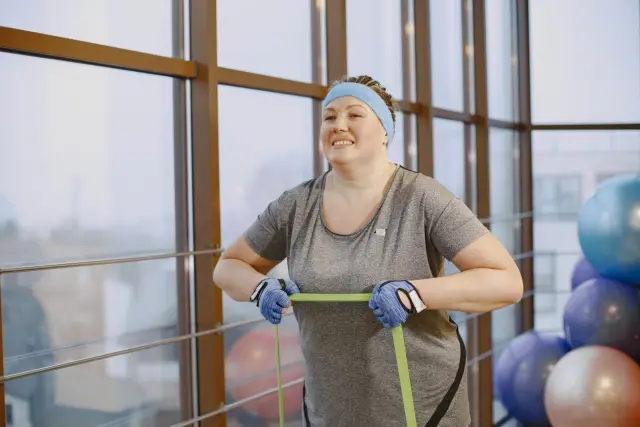
Resistance training doesn't need to mean a serious gym routine to produce a real effect. Studies on older adults have found meaningful strength and muscle gains from programs using resistance bands, bodyweight movements, or basic dumbbells, done consistently, more than from any specific piece of equipment. On the protein side, research on older adults specifically tends to point toward a higher target than the general adult minimum, since anabolic resistance, needing more protein per meal to get the same muscle-building response, becomes more common with age. This is part of why OffRamp sets a personalized protein floor rather than defaulting to the generic minimum built for a much younger, sedentary reference body.
Frequency matters more than intensity for anyone starting from close to zero. Two or three short sessions a week that actually happen consistently outperform an ambitious five-day program that gets abandoned after two weeks, and the research on older adults specifically tends to reflect that: consistency over months is what shows up in strength and muscle mass measurements, not how hard any single session was.
When to loop in a doctor
A formal sarcopenia diagnosis, if there's real concern about muscle loss beyond what feels like normal fatigue, involves a doctor and tools most people don't have at home, like a DXA scan or a standardized grip strength and gait speed assessment. Noticeable, ongoing weakness, frequent falls, or a rapid, unexplained drop in physical capacity are all worth raising directly with your prescriber rather than assuming resistance training and protein alone will resolve something that might need a closer look.
How OffRamp helps
OffRamp's protein floor and short strength sessions cover both of the levers research consistently backs against sarcopenia, in one place, logged in a couple of taps each. Neither one requires a gym membership or a complicated program, just consistency, which is the part the research keeps coming back to as the thing that actually matters.