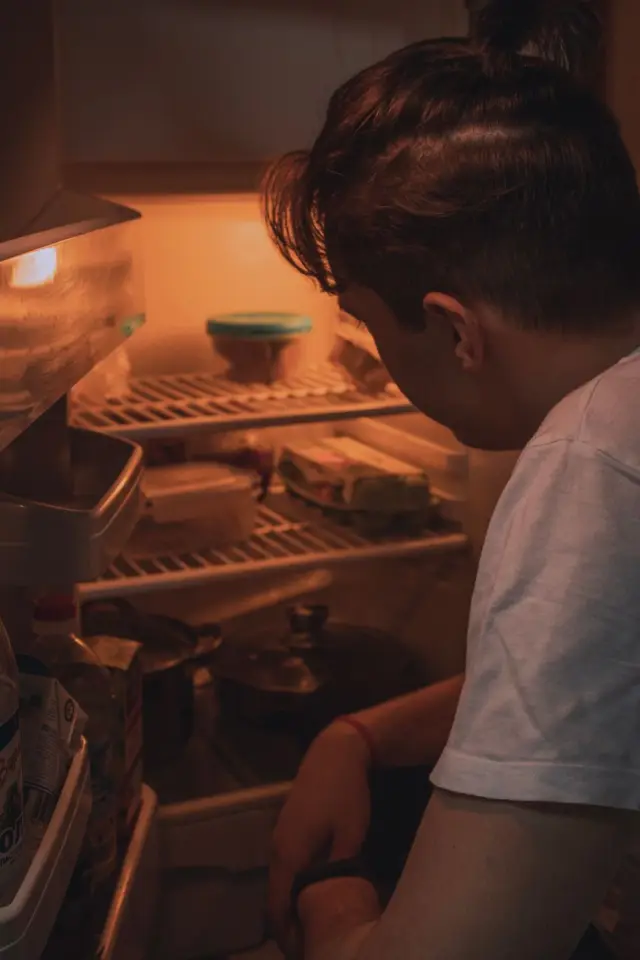
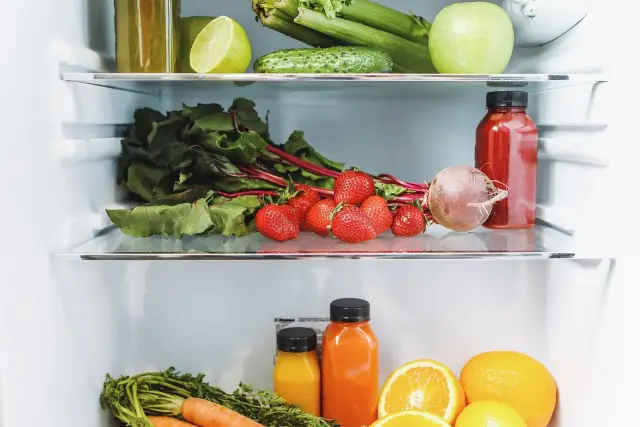
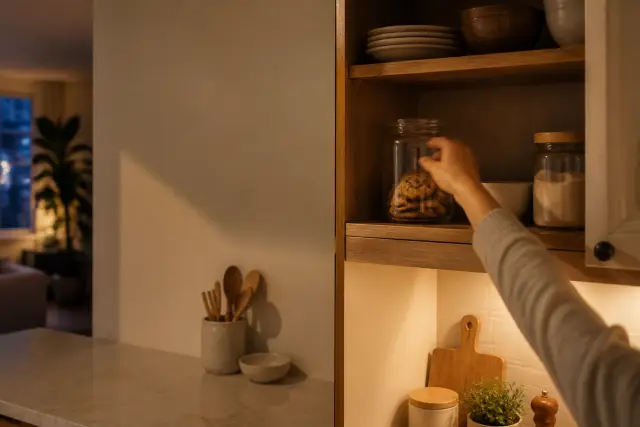
By changing what's happening, not by adding rules to what's allowed. A 2015 study in Frontiers in Psychology by Andrew Moynihan, Wijnand van Tilburg, Eric Igou and colleagues ran three separate investigations into this, and the practical finding wasn't about restraint at all. Boredom predicted how much people ate, it pushed them specifically toward snacking rather than toward eating well, and the thing that successfully competed with a snack was more interesting healthy food, not the absence of food.
The short answer
Boredom eating is a novelty problem wearing a hunger costume. The fix is to give the empty stretch something in it, and to make the food that's already in your day more worth eating, rather than to try to want the snack less. Willpower is a poor tool here because there's nothing much to resist. There's just nothing else going on.
What the study actually found
The researchers approached this three ways. In a week-long diary study, participants recorded their state boredom and their food intake, and boredom positively predicted consumption of calories, fat, sugar and protein. That's a naturally occurring pattern rather than a lab artefact, which matters, because it means this shows up in ordinary weeks rather than only under manipulation.
The two experiments then manipulated boredom directly. A high-boredom task, compared to a low-boredom one, increased the desire to snack as opposed to eating something healthy, particularly among people high in objective self-awareness. The third study found the same group, when bored, ate more of the less healthy options, and also more of the exciting healthy options.
Boredom didn't drive people toward food. It drove them toward something interesting, and food was the nearest interesting thing.
That last detail is the one worth keeping. The researchers concluded that more exciting healthy food serves as an alternative to less adaptive consumption following boredom. Boredom wasn't reaching for calories. It was reaching for stimulation, and it took whatever was closest.
Why boredom eating feels like hunger
It presents as hunger because the action it produces is identical: you end up in the kitchen. But the two signals behave differently and can be told apart with practice. Real hunger builds over an hour or two, doesn't care much what it gets, and switches off once you've eaten enough. Boredom eating starts within minutes of a lull, wants something specific and interesting, and doesn't reliably stop at fullness, because fullness was never the thing it was after. The general skill of separating a head signal from a body one is covered in food noise versus hunger.
The dead hours where it lives
Boredom eating clusters. For most people it happens in the same two or three windows every week: mid-afternoon when concentration has gone but the day hasn't ended, the hour after getting home before anything has started, and the stretch after dinner in front of a screen. What those windows share is that they're unstructured and slightly too long. Nothing is happening, and nothing is scheduled to happen.
Naming your own windows is more useful than any general advice, because the intervention has to fit the specific gap. A 4pm slump and a 9pm screen lull need completely different things. If yours is concentrated after dark, the trigger stack is usually more complicated than boredom alone, and the four real triggers behind night snacking is the more precise place to start.
Why just distracting yourself mostly fails
The standard advice is to find something else to do, and it underperforms for a specific reason: the alternatives people pick are usually less stimulating than eating, not more. Scrolling a phone is the obvious example. It's available, it's effortless, and it's often exactly as unengaging as the boredom that prompted it, so the urge to snack survives the distraction intact.
The study's own framing suggests why. Boredom involves an appraised lack of meaning in the present situation, so anything that fills the time without adding meaning or interest doesn't resolve it. The competing activity has to actually be more engaging than the snack, which rules out most of what people reach for by default.
What actually works
Three things, in rough order of effectiveness. Make the food in your day more interesting, which is the study's own conclusion rather than a stretch from it. Food you actively look forward to competes with novelty snacking in a way that plain, dutiful food never does, and this is one of the few areas where the more enjoyable option is also the more effective one.
Put something in the dead window on purpose. Not aspirationally, and not something that requires the motivation you're already short of. Something small, specific, and more engaging than a bowl of crisps. The bar is genuinely that low, and it's still higher than most default alternatives clear.
Front-load your protein earlier in the day. This doesn't touch the boredom, but it removes the ambiguity, so a 4pm urge is clearly a boredom urge rather than a boredom urge sitting on top of genuine under-eating. Separating the two makes both easier to answer.
How OffRamp helps
OffRamp is deliberately built without a snack rule, a forbidden list, or a calorie ceiling, because none of those address a novelty problem and all of them add a rule to break. What it gives you instead is one daily protein floor, a minimum rather than a maximum, so an aimless afternoon has something to aim at rather than something to resist. Quick-add logging takes a few seconds, which matters more than it sounds: the friction of logging is what makes people stop, and a boredom-eating pattern only becomes visible once it's been recorded a few times. Seeing the same 4pm gap show up three weeks running is what turns a vague habit into something you can actually plan around.