
Constipation on a GLP-1 has two causes, and only one of them is the medication. The drug slows how fast your stomach empties and how fast the rest of your gut moves. At the same time, appetite suppression means far less food is going in, which means less fibre and usually less fluid. A slower pipe with less travelling through it is a predictable outcome.
That split matters, because the first cause is your prescriber's territory and the second is yours. Nothing on this page is advice about your medication, and nothing here should change what you take or when. The practical ground is the eating and drinking side.
Why a GLP-1 slows the gut
GLP-1 receptor agonists work partly by delaying gastric emptying. Food sits in the stomach longer, which is a large part of why a small plate feels filling and why early fullness arrives after a few bites. The same slowing applies further down the digestive tract.
So the mechanism that produces the benefit produces the side effect. They are not separable, which is why constipation shows up in the trial data rather than being an unlucky individual reaction. Our explainer on early satiety covers the fullness side of the same slowing.
What 39 studies found
A systematic review and dose-response network meta-analysis published in the International Journal of Obesity in 2025 pooled 39 articles covering 33,354 people with overweight or obesity who did not have diabetes, which is the population most GLP-1 weight-management research has historically skipped.
Nausea, vomiting, diarrhoea and constipation came out as the four commonest gastrointestinal effects. For constipation specifically, semaglutide and liraglutide were both associated with a significant increase in risk, while cagrilintide and exenatide showed no significant increase. For nausea, every GLP-1 assessed raised the risk, with orforglipron highest, then exenatide, tirzepatide, semaglutide and liraglutide.
The useful takeaway is not a ranking to shop from. It is that the risk profile differs between medications, which is precisely the kind of detail that belongs in a conversation with the person who prescribes yours rather than in a decision you make from an article.
The second cause nobody mentions
Here is the part that gets left out of most write-ups. A crossover trial of once-weekly semaglutide found people ate 24 percent less across all free-eating meals of the day. Think about what that does to everything that travelled alongside the food.
Fibre falls by roughly the same proportion, because fibre comes from food. Fluid falls too, since a surprising share of daily fluid arrives in meals rather than in glasses, and a smaller appetite often dulls thirst as well. Then add that many people deliberately prioritise protein when appetite is limited, which is the right call for keeping muscle but tends to crowd out vegetables, fruit and whole grains.
So the fibre and fluid shortfall is not a failure of willpower. It is arithmetic. And unlike gastric emptying, it is something you can correct directly. Does a GLP-1 make you more likely to get dehydrated goes into the fluid side in detail.
What generally helps
The measures are the ordinary ones. What changes on a GLP-1 is that they have to be deliberate, because they used to happen by accident through the volume of food you ate.
Fluid, spread through the day. Sipped rather than gulped, because a large volume at once meets the same slow-emptying stomach that your meals do. Keeping a glass within reach beats trying to remember.
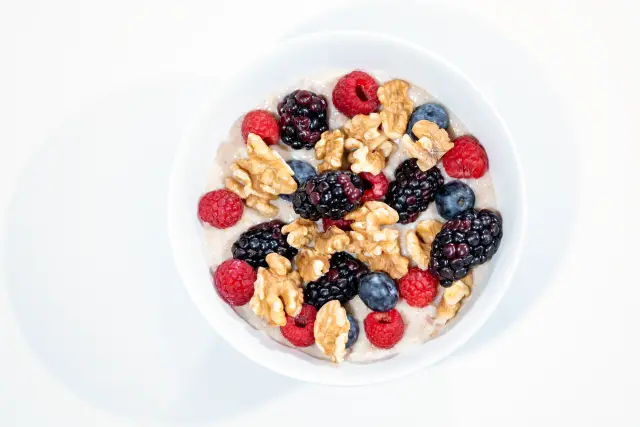
Fibre from food, where appetite allows. Berries, oats, beans, lentils and vegetables, in the small portions that are realistic rather than the large ones that are not. Fibre and fullness covers the trade-off, which is real: fibre is bulky, and bulk is the thing in shortest supply when you can only manage a few bites.
Daily movement. Walking in particular. Physical activity influences gut transit, and it is the easiest of the three to actually do on a day when eating feels like work.
What is not on this list, deliberately: any specific supplement, laxative, or dose of anything. That is a question for your prescriber or pharmacist, who knows what else you take. This page does not answer it.
When it belongs with a clinician
Constipation that is uncomfortable is common. Constipation that comes with severe or worsening abdominal pain, repeated vomiting, blood, or days with no bowel movement at all is not something to manage from an article. Contact your prescriber, or seek urgent care if symptoms are severe. The same goes for anything that changes suddenly or does not settle.
OffRamp is built to stay on the right side of that line. It tracks weight, protein and strength sessions. It records nothing about your medication and suggests nothing about it, by design, because a weight-maintenance app has no business near a prescribing decision.
What happens once the medication clears
Gut effects driven by slowed emptying generally ease as the drug leaves your system, over a few weeks depending on which medication it was. For most people, constipation improves rather than worsens during that window, and the bigger change is appetite returning.
A smaller group notices the opposite for a while: a gut that is suddenly moving at normal speed again, alongside an appetite that is back before the routine has caught up. Either way it is a transition rather than a new permanent state. We walk through the whole sequence in side effects of stopping Ozempic and how long they last.
The constant across both phases is the boring part: fluid, fibre where you can fit it, movement, and protein held steady so that the weight you keep off is not muscle. That is the part that stays yours regardless of what the medication is doing.